It’s February, and in a few short days it will be Valentine’s Day. I thought it would be good to promote a more “self love” vibe this Valentine’s Day rather than romance and that kind of relationship to the Holiday. After all, we are the most loving to others when we are taking care of ourselves first. And taking care of ourselves is the best example of self-love. Taking time to nurture our own needs, to give ourselves the attention and kindness we deserve, and to give thanks to our minds and bodies for housing and holding our spirits is not only essential to our well-being, but how we in turn treat those around us. We can love easier and better when we practice with ourselves!
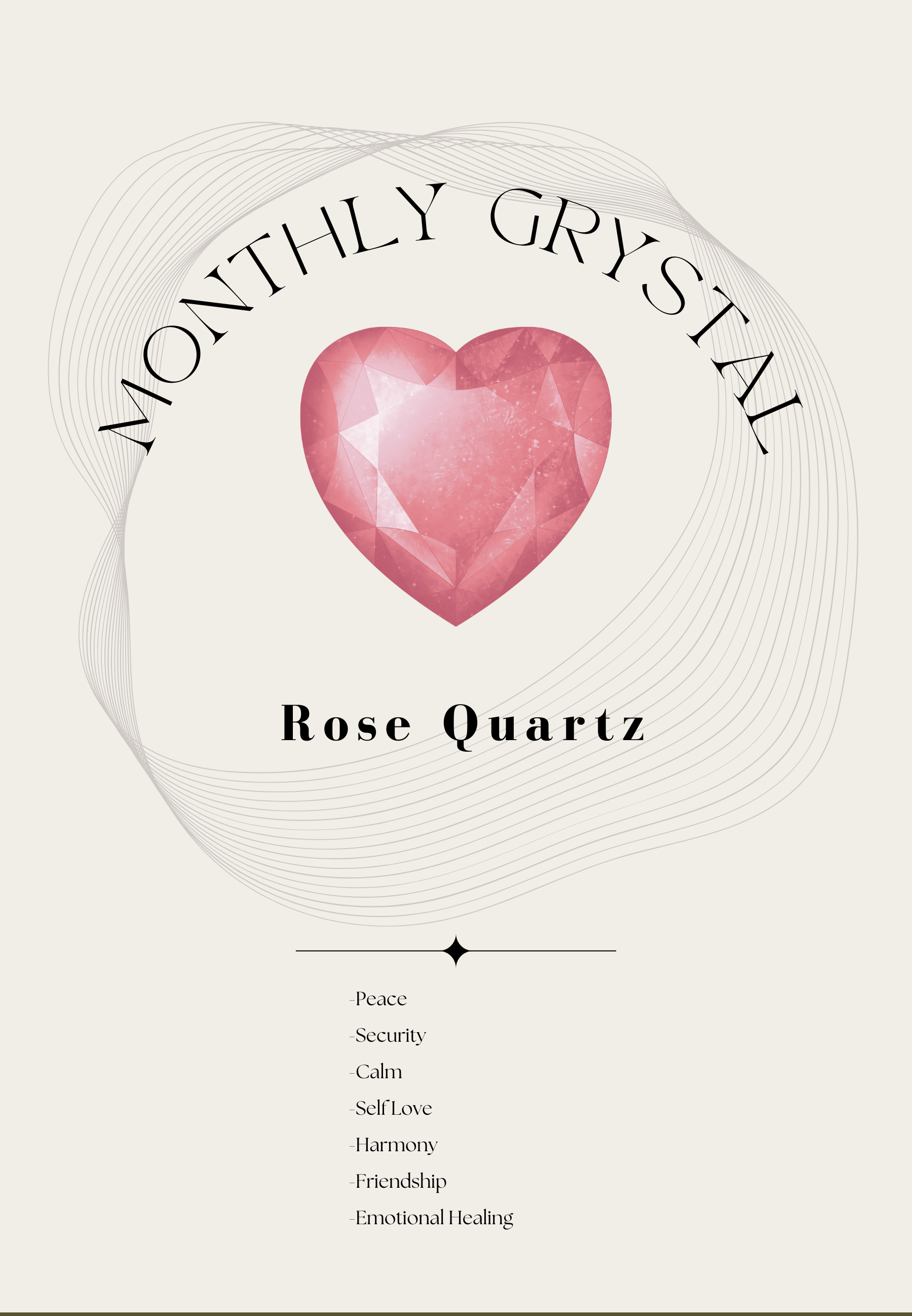
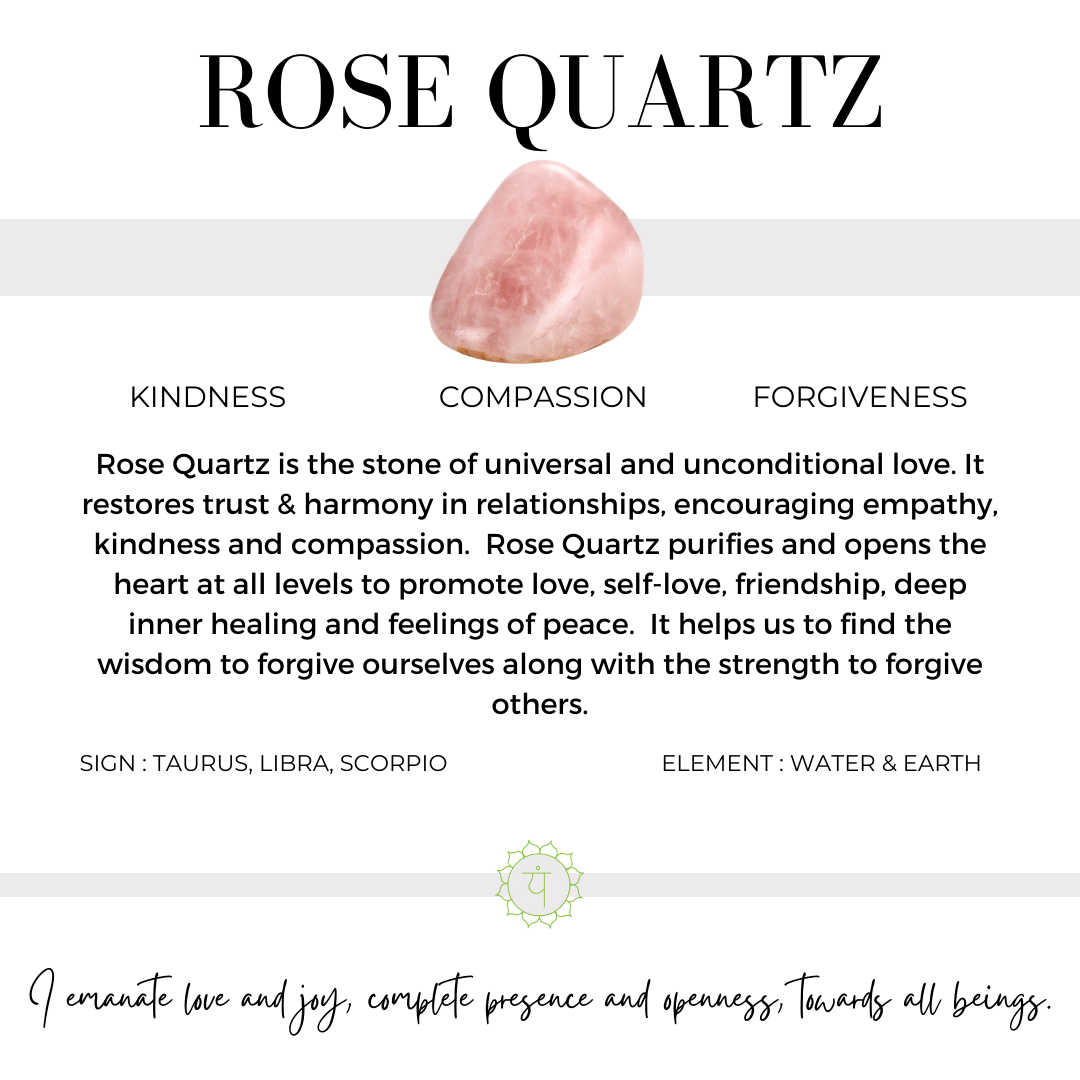
Rose Quartz is the stone of unconditional love, making it the perfect stone for all things love related. Self-love, friendship, family, and even romantic love. It promotes harmony and gives a sense of security, so carrying it around can feel like a warm hug.
If you are needing to work on any emotional healing, it’s a great stone to hold during meditations and workings centered around healing old emotional wounds, or releasing emotional trauma. If you are working on relationship issues in any capacity (self, friendship, romantic, family) it can help promote healing and peace, and bring in a sense of calm and understanding to the situation.
Rose Quartz is said to have some physical benefits as well. It is believed to help the heart and circulatory system. Also, it may aid in the repair of unhealthy skin cells, promoting healthier, glowing skin. Some believe it has the ability to release impurities in the body, creating a detoxifying effect so that the body can heal itself easier.
Rose Quartz is mined all over the world in places like Brazil, Madagascar, India, South Africa, Australia and the United States of America. Making it easily accessible and one of the most popular stones to have in a crystal collection. It’s usually one of the first stones collected, along with Amethyst, Citrine, and Clear Quartz. Paired with its awesome healing qualities, it’s a stone everyone should have in their personal collection!
It also makes a great gift, especially for Valentine’s Day, for friends and family and even partners. We have lots of heart shaped Rose Quartz carvings in the shop as well as bracelets, earrings, necklaces, towers, and tumbled stones.
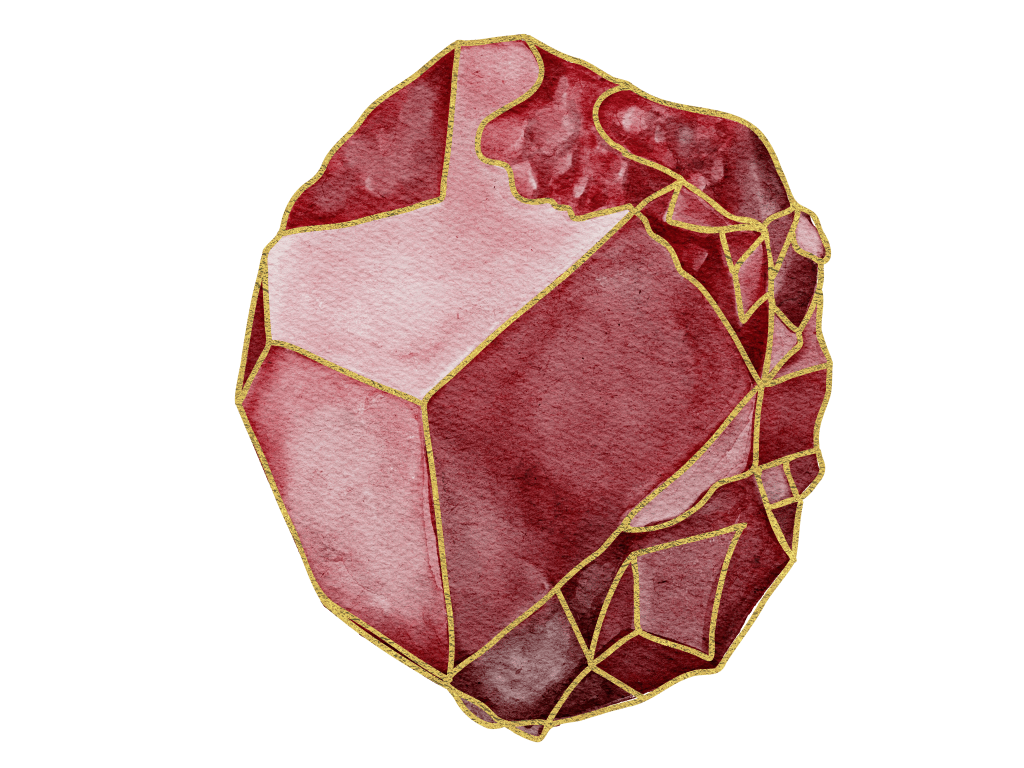
And if you were looking for a more “spicy” stone for Valentine’s Day, try checking out Garnet. You can read more about it here. Pair the two together for a powerful combo for your lover that gives both tender romance AND fiery passion *wink*.
If you have been following this blog, you will have already read a bit about the four Celtic Fire Festivals, or “Greater Sabbats” of the Pagan “Wheel of the Year”. If you haven’t, you can read a bit more of that on this post, where I have broken it down for you. For the sake of not being too repetitive, I will let you go back to that post for more info on sabbats in general, and I’ll just glaze over it here before getting to the meat and bones of what Imbolc is.
We have already covered Samhain (Sow’n), and Lughnasadh and after this Imbolc post, we will be sure to cover Beltane on May 1st, as we prepare to move into the summer months.
Together, Samhain, Lughnasadh, Imbolc, and Beltane make the Greater Sabbats, with Ostara, Litha, Mabon and Yule making the “Lesser Sabbats” which mark the Solstices and Equinox’ of the year.
Imbolc is also known as Oimlec, Candelaria, and Lupercus. We know it to fall on February first, though, some Celtic traditions would say it falls on the second new moon after the preceding solstice or equinox. So you can celebrate Imbolc anytime between January 29th to February 3rd and still be fine. I will be celebrating on the 31st this year, as I am leaving town February 1st, and this is the best time for me to refresh my altar and connect to the energies and spirits associated with the bringing forth of spring.
Imbolc marks the halfway point through the dark half of the year, or what we know as the winter months. In old Britain and in much of Europe, they would have great bonfires known as “balefires” that were lit across the highest hilltops in support of the God as he made his way through the dark half of the year towards Beltane. Once there, the Goddess would take over until Samhain, where once again, the God would take back over and the wheel of the year would start anew.
These Sabbats were a way of welcoming all the seasons and cycles of the year, giving thanks, and petitioning for blessings for health, home, crops, and protection. Imbolc comes from the word i’mbolg which means “in the belly”, symbolizing the first stirrings of spring in the womb of Mother Earth, and all the new life that happens during the springtime such as lambing season.
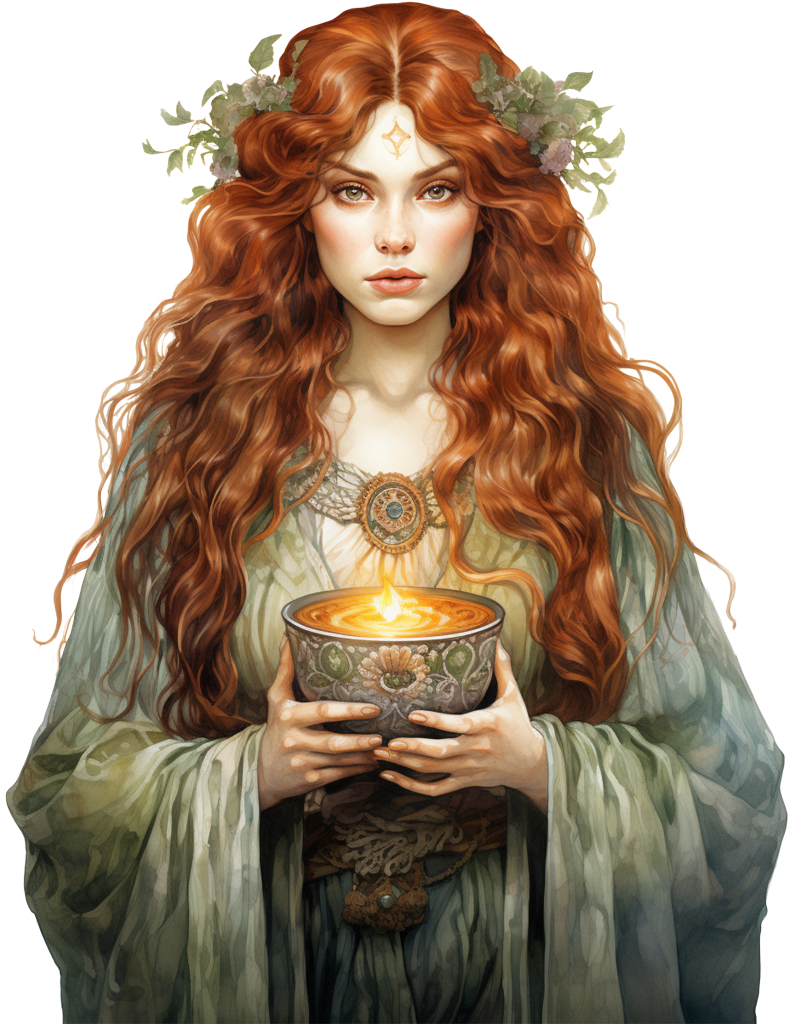
The Goddess Brigid
The Goddess Brigid, also known as Bridget, Bride, Brig, or Brid, has long been associated with Imbolc. There is a LOT of speculation and mystery around her and who she was and came to be. Some would say she is the Celtic version of Persephone (if you need a little info on Persephone, click here and read the fifth paragraph). Which totally makes sense given that she is celebrated during the time when we start to come out of our winter slumber and work our way into the season of spring.
Due to the fact that Ancient Celtic traditions weren’t written down, and were passed along through family lineage and often kept secret, we do not have all the answers we seek today about her, or even about many Celtic practices. We have just a little information here and there to go off of, and so, we are left to put the puzzle together ourselves and to fill in the gaps as we do research in order to make sense of things.
With that being said, the Goddess Brigid was thought to be a single Goddess by some, but also a Triple Goddess by others. As a Triple Goddess, she would inhabit the qualities of all women, in every cycle. She is known today as the Goddess of poetry, learning, healing, mid-wifery, and metal smithing. She was often called upon by soon-to-be mothers in the midst of child labour, for pain relief, and to ensure a safe birth.
The name Brigid means “fiery arrow” and it became a tradition around the 12th century to keep an eternal flame burning at her shrine in Kildare Ireland.
During the eve of Imbolc it was tradition to invite the Goddess Brigid into the home, asking for her blessing, and giving her offerings of flowers, shells, herbs, ribbons, and the traditional “corn dolly”, in return.
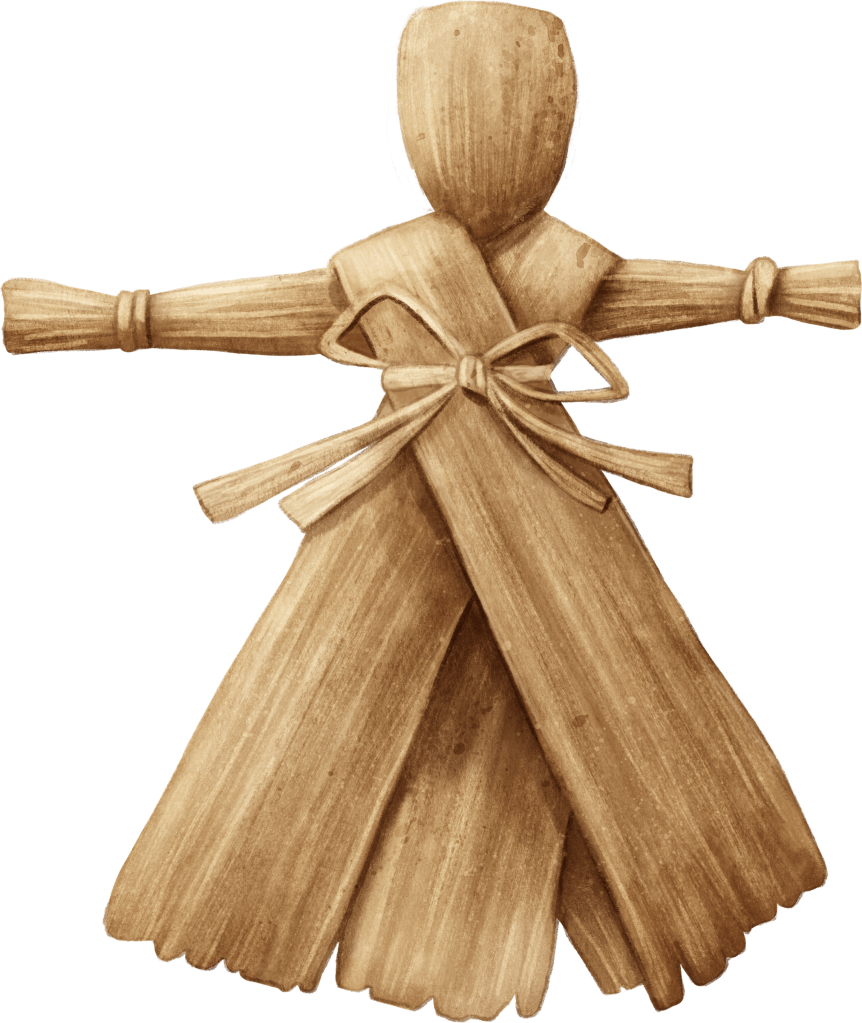
The Corn Dolly
The corn dolly is just as it sounds, a doll made from corn husk or the last sheaf of grain. There are many stories on how the corn dolly was used and what it represented, but I will try to stick mainly to its associations with Imbolc. It is thought to represent and honor the spirit of corn and grain, and it is said they were burned during Imbolc to bring about luck to the upcoming crops.
Another told tradition of the corn dolly, was where families would create a dolly, put it into a basket and take it house to house where the women of each household would welcome her in with a special ceremony, paying respect and giving offerings in return for her blessing upon their household.
Brigid’s Cross
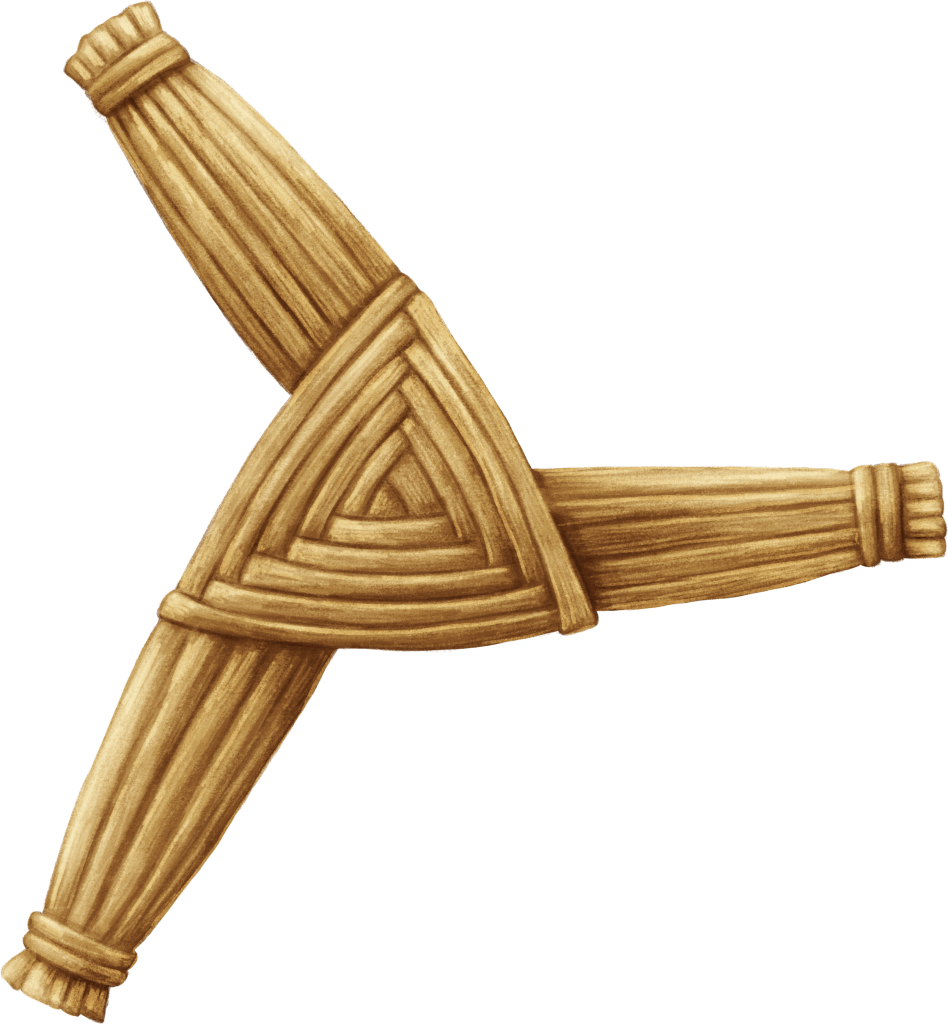
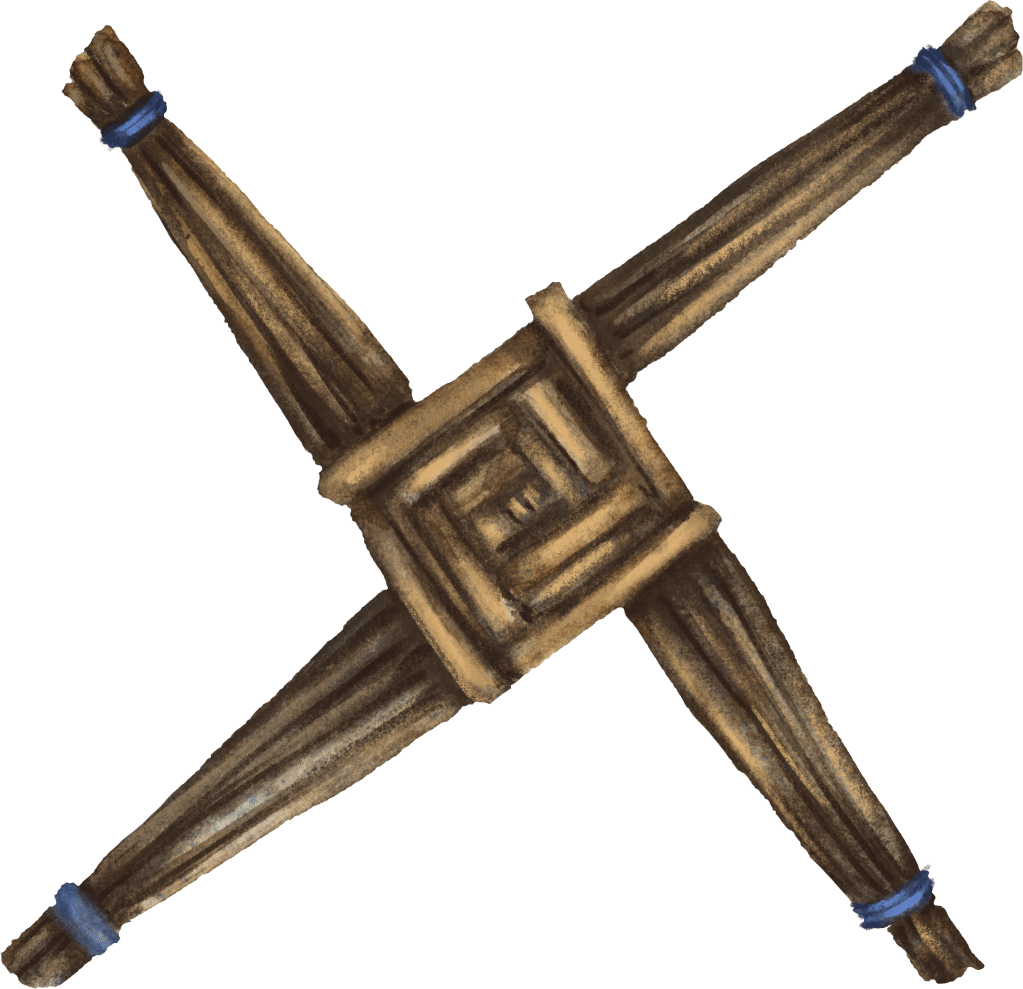
A Brigid’s cross became a sort of talisman associated with Imbolc, and was traditionally created out of Rushes (a long grass-like leaf with unjointed stems) then hung above the door or a window, as a symbol of protection, hope and renewal.
What I can tell from my research, is that the oldest versions had three sides, unlike the one’s we see today with four sides. This most likely became the new normal when Imbolc was “transformed” into the Christianized version called Candlemas, and it was probably made to represent a more traditionally “Christian” cross. I will speak more about this later on.
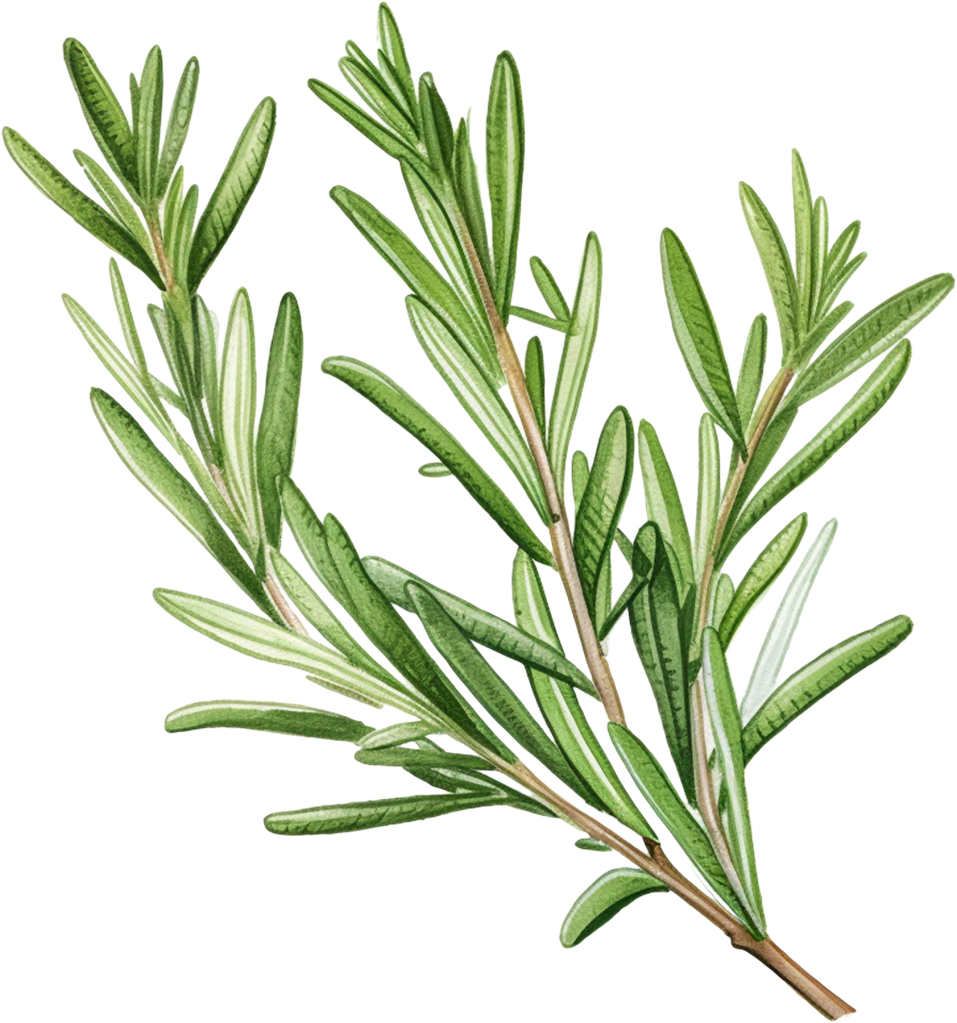
Now days we can make Brigid’s crosses out of whatever is grown in our area that has a similar shape to the traditionally used Rushes. I live in the desert and have made them out of Palm leaf strips, and I recently saw one made from Yucca leaves.
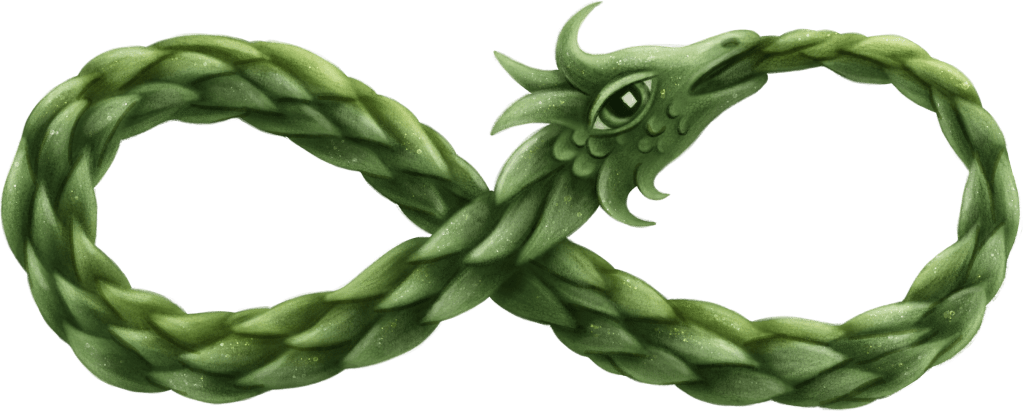
Serpents were traditionally associated with creativity and inspiration, and in Celtic mythology, Brigid was associated with a hibernating serpent that would awaken at Imbolc.
Colors
White, silver, green, yellow, and sky blue.
Crystals
Garnet, Moonstone, Amethyst, Bloodstone, Selenite, and Rose Quartz.
The Goddess Brigid, St Brigid, Bastet, Eros, Aphrodite, Hestia, Aradia, Aenghus Og, Ceres, Cerridwen, Faunus, Gaia, Pan, Venus, and Vesta.
How to Celebrate Imbolc Today
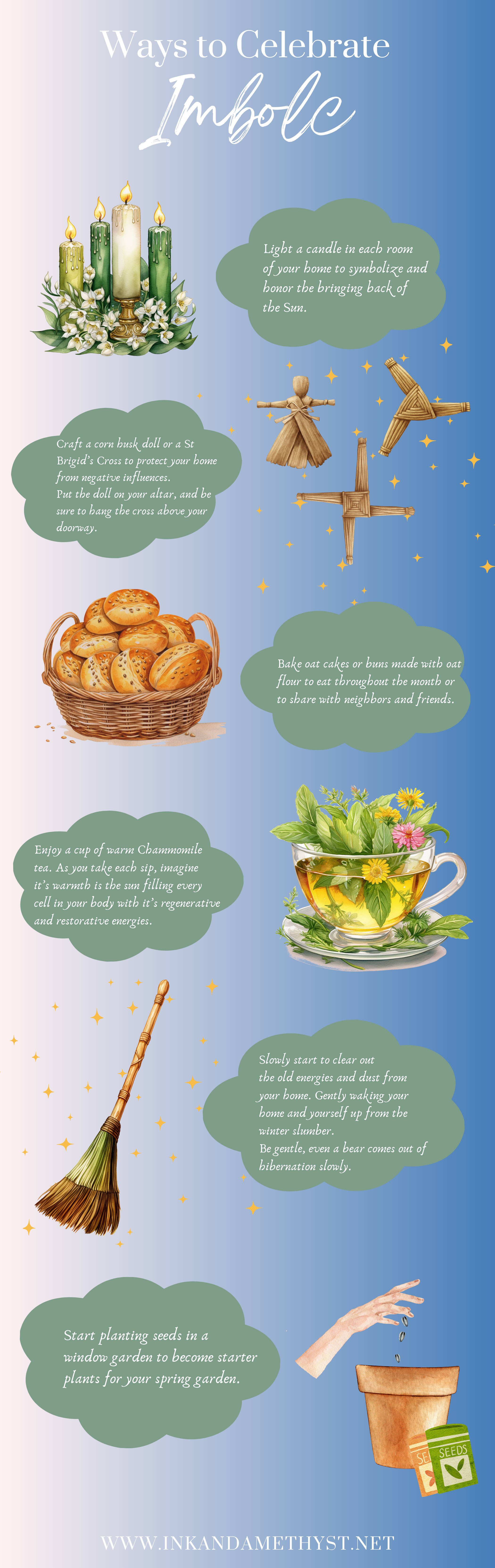
You don’t have to light big balefires, or pass around a corn dolly to celebrate Imbolc today. I always change my altar out for each season or Sabbat, and place offerings like some of the things listed above, and say prayer for blessings upon my household and those I love. Below are some simple yet effective ways you could celebrate if you want to be a part of honoring this season too!
The Christianized Version and Brief History
It is always interesting to learn about the Christianized versions of ancient Sabbats that have become modern Holidays and celebrations.
With Lughnasadh we have the Christianized version of Lammas (Loaf Mass). With Samhain we have “All Saints Day” and “All Souls Day”. With Ostara/ Easter, Christmas/Yule, Beltane/May Day, and Litha/The feast of St John the Baptist. It is understood that when the Roman Emperor Constantine was trying to convert the masses (in a political move) to Christianity, he was able to convert many who didn’t want to give up the old celebrations, by transferring them over into a Christianized version of the same thing.
The Christianized version of Imbolc is Candlemas. This Holiday is observed on February 2nd, where Roman Catholics and Eastern Orthodox celebrate it as the Feast of the Presentation of Jesus at the Temple. It commemorates a story found in Luke 2:22-40, where Joseph and Mary take the baby Jesus to the Temple in Jerusalem. During this visit, the baby Jesus was given a blessing in which he was declared a “light” of hope to humanity.
Candlemas is a time to welcome in “the light” and is celebrated by the blessing, anointing, and lighting of candles, much like the Pagan Holiday of Imbolc. They are known today as two completely separate Holidays, though we can’t deny their similarities.
However you choose to celebrate, take a moment to connect with what resonates most with YOU. Connect to the cyclic nature of earth, and your maker, and whatever you feel inspired to that is for your greatest and highest good, and for the greatest and highest good of all. Bless you, and blessed be!
 Ink & Amethyst