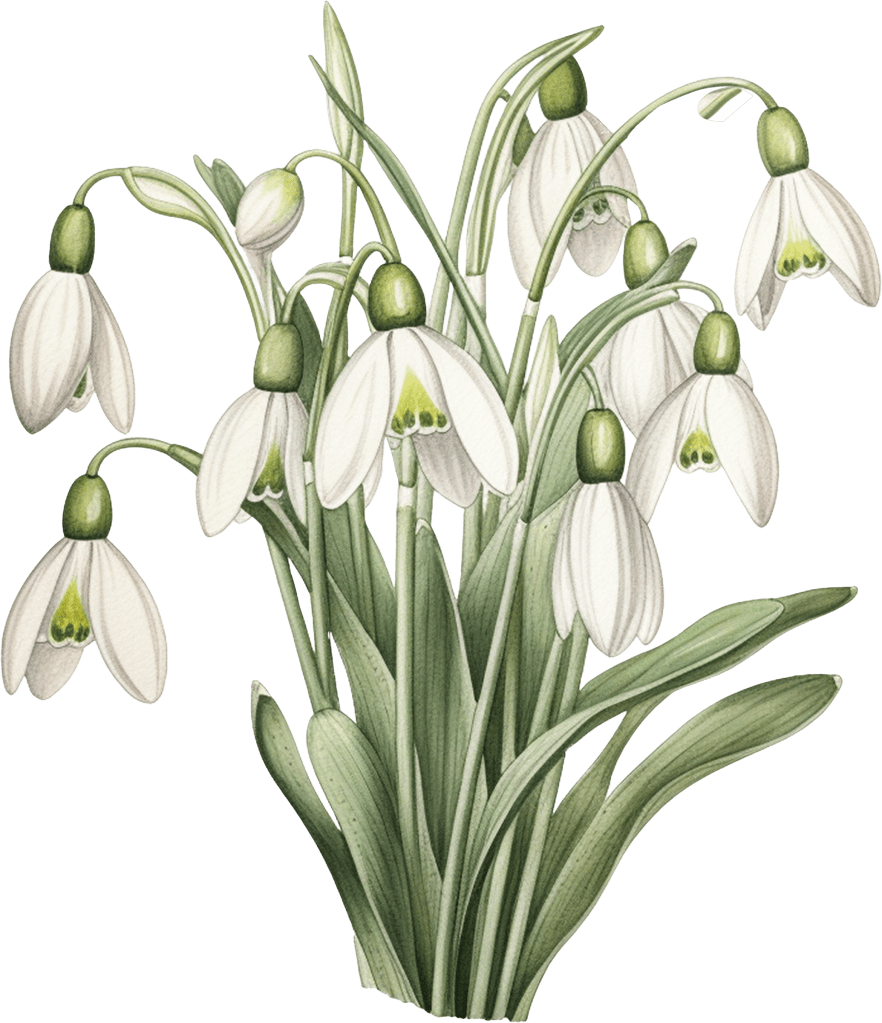
This month we are highlighting the Snowdrop flower. I must admit, I didn’t know much about this flower because it is not native to my area. (I can’t wait to highlight some of the flowers that are.) But it is a flower traditionally used in Imbolc celebrations and its meaning and correspondences go with this time of year perfectly.
Let’s start with a little basics about the Snowdrop-
The Snowdrop (Scientific name: Galanthus Nivalis) is a flower originally native to Europe and the Middle East, more specifically, regions like the Caucasus, Eastern Turkey, Northern Iraq, and Western Iran. The first recorded cultivation of the Snowdrop flower was in England in the 16th Century, but it is argued that they were brought over from either the Romans, or Norman monks much earlier than that.
Snowdrops were often one of the first blossoms to bloom at the end of winter, popping up through the blanket of snow and sending a sign that warm days were on their way. So naturally it was considered a flower of “Hope and New Beginnings”. The fact that the flowers survived the harshness of winter gave it, also, the association to “Resilience”. They are a hardy perennial, meaning they come back year after year, which may also contribute to their “Resilience” association.
If you have read any of my previous “Flower of the Month” posts, you know that I have a small fascination with the Victorian Language of Flowers. This is basically a way of communication created by upper class Victorian society that involves giving meanings to flowers to convey feelings and messages. By sending certain flowers to people for specific situations, you were saying something. On the graphic below, you can see some examples of how the Snowdrop was used to communicate in this way.
The Victorian Language of Flowers-
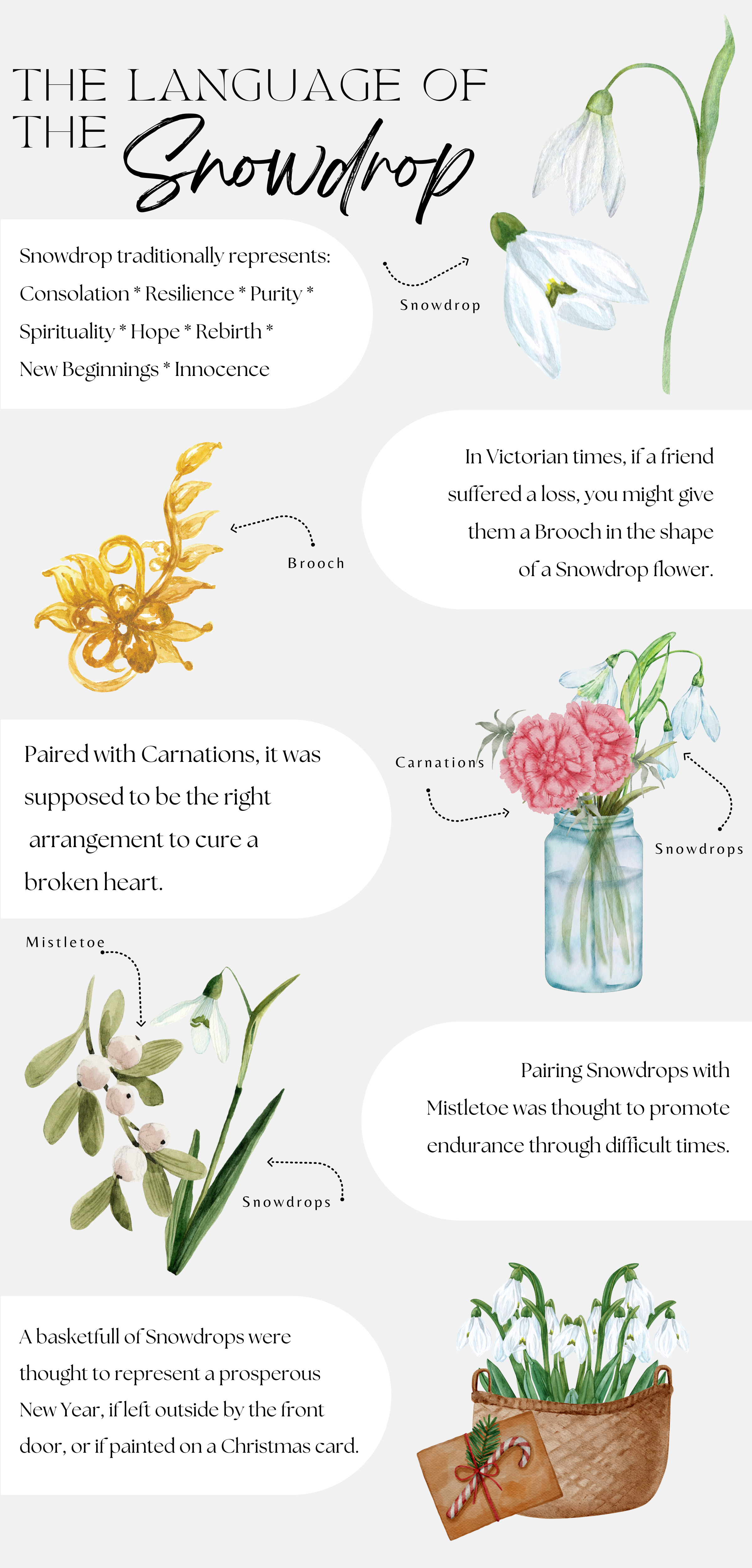
While the graphic above shows most of the happier or lighter associations of the Snowdrop, there were definitely some negative ones too. It was thought among some to be a bad omen to bring Snowdrops into the home, almost as if it was a harbinger of death, yikes!
But having Snowdrops in the garden were a welcome and happy thing, and even associated with higher status, as it was a much sought after flower during the time.
As mentioned above, I chose to highlight Snowdrop because of it’s association with Imbolc and the this particular season of the year. Imbolc is the halfway point from winter to spring, and so the Snowdrop gives us hope that any day, we can start seeing signs of spring and warmth again, and the return of the sun!
Be sure to check back here soon for a post on Imbolc, and how you can honor and celebrate the bringing in of the next season. Until then, be well!
Refrences:
A Victorian Flower Dictionary by Mandy Kirkby
Floriography by Jessica Roux
 Ink & Amethyst