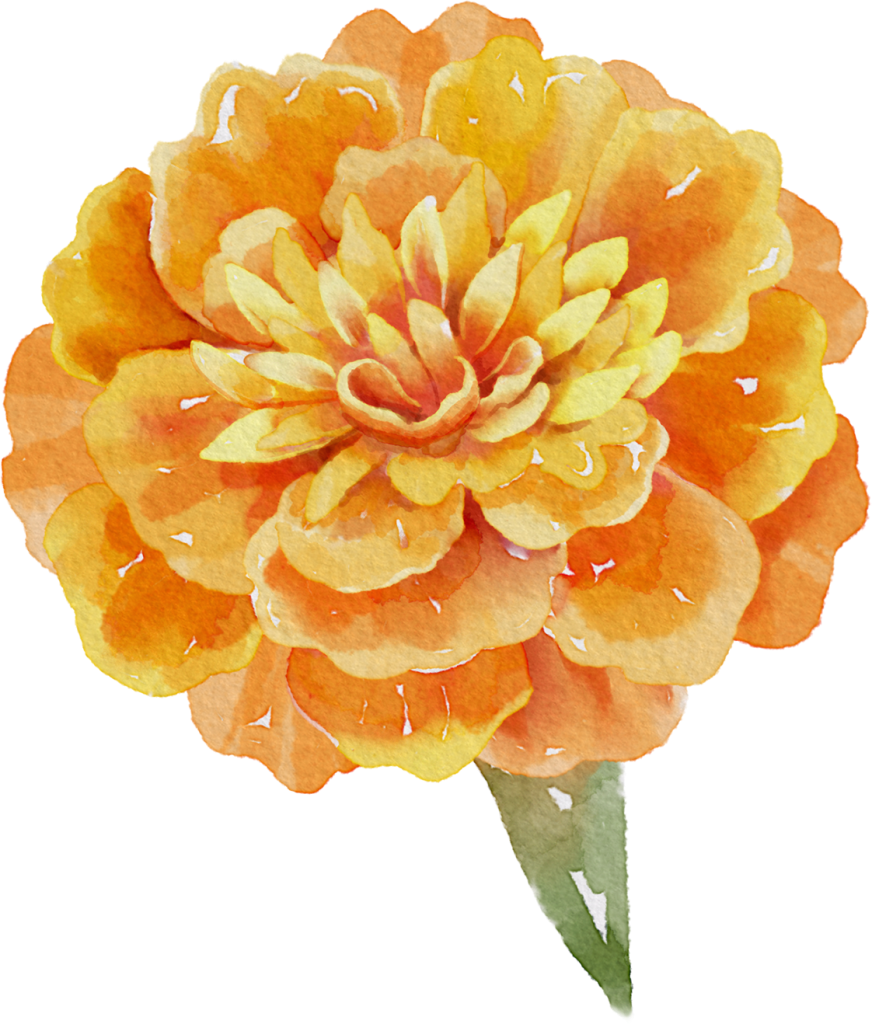
If you have been reading this blog/newsletter for the past several months, you already know about my fascination with the Victorian Love Language of Flowers. If you haven’t been following along, be sure to read about this topic on my first post here.
Each month I highlight a flower and what it meant in the complex, beautiful, and often weird language communicated through flowers in the Victorian era.
This month I’m highlighting Marigold. Marigold has deep connections to this time of year and is the perfect flower to dive into as we celebrate Autumn, Samhain, and other cultural rituals and celebrations that happen around this time.
First let’s talk about the basics of the Marigold.
The Marigold (Calendula Officinalis) is native to the Americas and there are over a combined 50 species from the North, Central, and South Americas. It is a variety of daisy, and a cousin of the Calendula herb who is also a variety of daisy. It’s important to note that they are not the same flower/herb. However, Marigold is also edible, and often used to adorn gourmet salads and dishes, adding a touch of beauty and whimsy to the dish. If you want to do this, just be sure to get Marigolds grown for this purpose, as they are free from pesticides and other harmful chemicals.
Marigolds make great garden companions! Not only do they attract good insects that are great pollinators like bees, butterflies, and also hummingbirds, but they can ward off pests like nematodes that are harmful to potato and tomato crops. However, it’s important to note that the compound chemicals they produce for this process can be harmful to other certain crop types like beans and legumes. So be sure to do your research on where to plant the Marigolds in your edible garden.
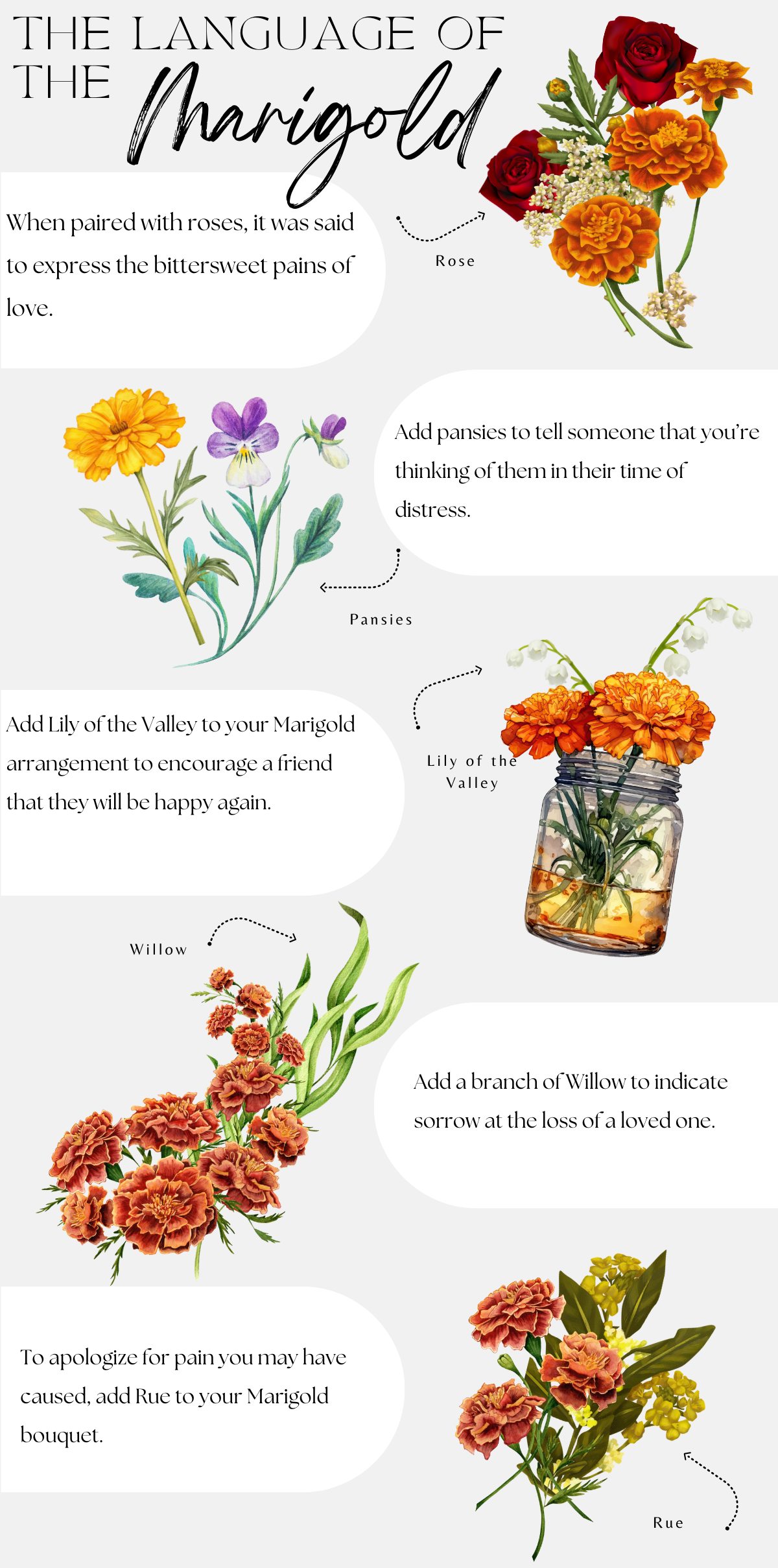
The Victorian Language of the Marigold
Below are some of the ways that the Marigold flower was used to communicate certain feelings and sentiments during the Victorian Era.
The Day of the Dead (Dia de los Muertos)
I would be remiss to not mention the association of the Marigold with the beautiful Mexican cultural celebration called Dia de los Muertos (which translates to The Day of the Dead). This is a celebration who has similarities to Samhain, in that it is believed to be a time where the veil between worlds is thin, and communication with spirits is tangible. It’s a time to honor and celebrate ancestors through ritual, prayer, altars, and offerings.
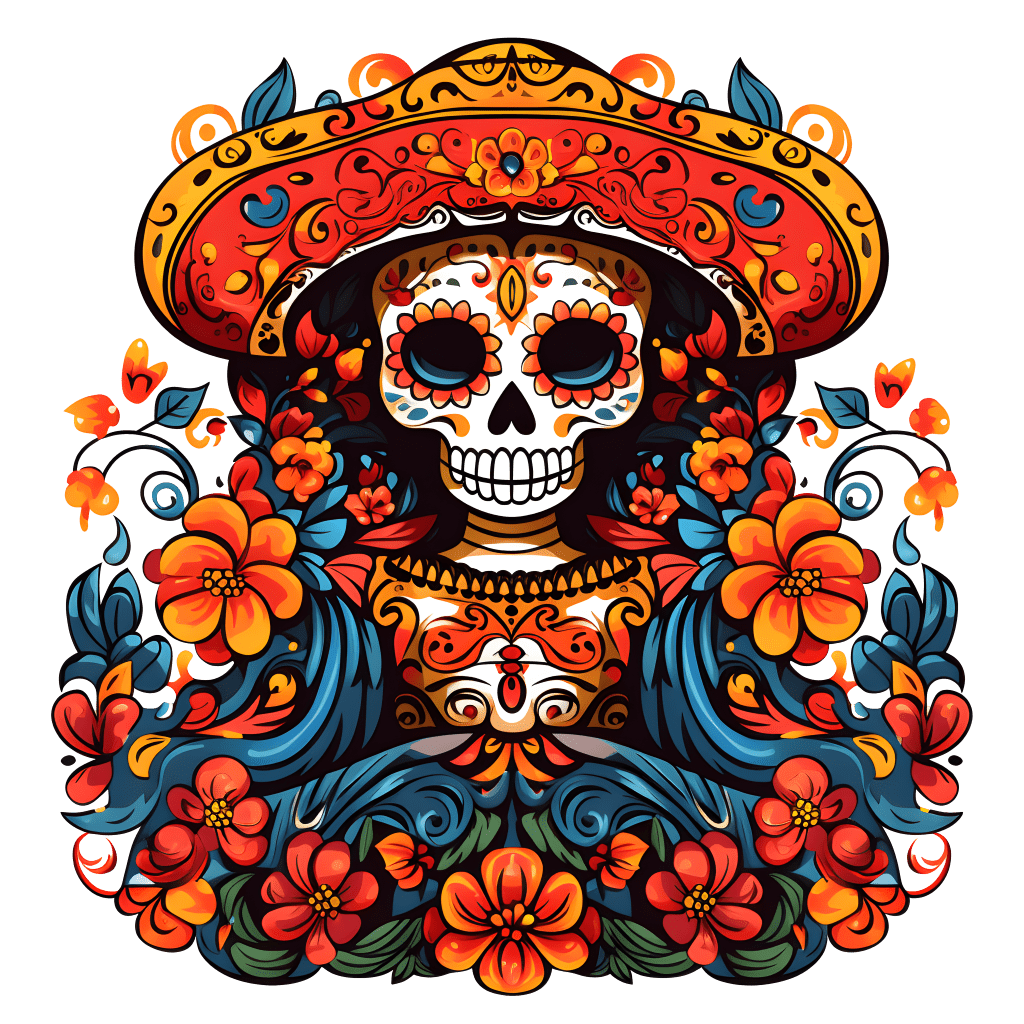
It’s beginnings are linked to Samhain through the Christian threads that tie into Mexico most likely through the Catholic faith and the intermingling (re-creating) of Pagan Holidays/Sabbats into Christian based Holidays like All Saints day and All Souls Day. Mixed with the traditions of the Mesoamerican rituals, Aztec beliefs, and rich Spanish culture, this Holiday was born and embraced in Mexico and has started to gain popularity in North America and other places.
The ancient Aztecs believed in the Goddess Mictecacihuatl, who was known as “The Lady of the Dead”. She was the one who would allow spirits to travel back to the Earth to communicate with their loved ones. It is said that the fragrance of the Marigolds could lead the spirits from their burial places to the homes of their loved ones, and therefore became a tradition to adorn ancestral altars with them in an attempt to honor and communicate with the dearly departed.
It’s a bonus that the Marigold has a beautiful bright color in various shades of orange, that go perfectly with the time of year and the celebrations that come with it!
So if you can find them, put some Marigolds on your ancestral altar if you celebrate Samhain, Dia de lost Muertos, or your own culture/ancestral lineage’s version of this thin-veiled holiday!
References:
Folk Magic & Healing (an unusual history of everday plants) by Fez Inkwright
 Ink & Amethyst