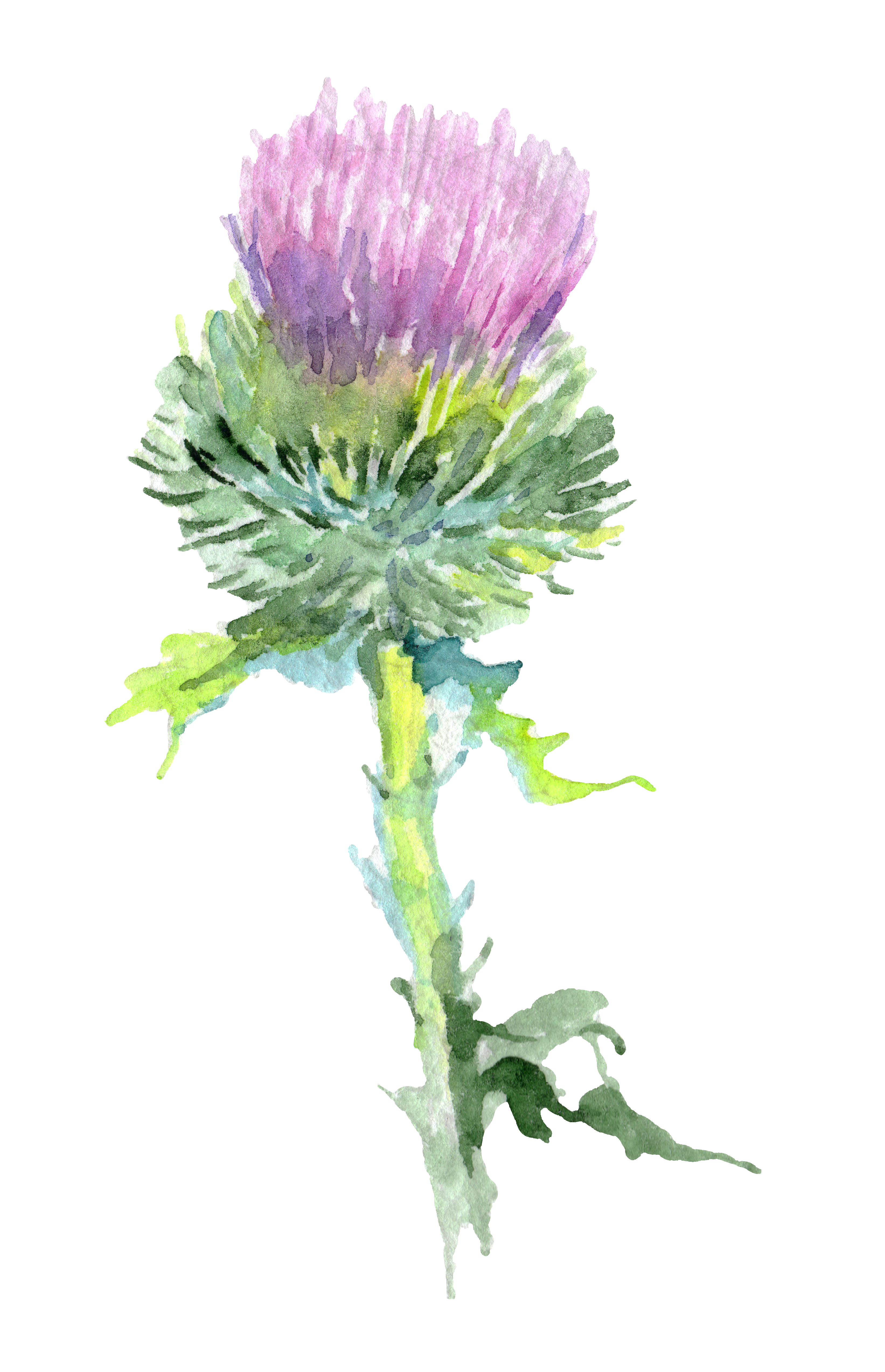
I went back and forth on what flower to talk about this month. There were two that took me a while to decide between, the Marigold and the Thistle, as they are both flowers used to celebrate the Autumn Equinox. But ultimately I decided save Marigold for next month as it’s more broadly used to celebrate several cultural traditions, holidays, and Sabbats in the October and November months. So that means I’ll now introduce you to the lovely flower that is Thistle.
The Thistle, and in this blog we are particularly covering the Milk Thistle, is a flowering plant that has a beautiful purple bloom atop a bed of spiny, spiky thorns. These thorns are a built-in defense so the plant doesn’t get eaten by herbivores. It’s a great pollinator and known to attract an array of flying insects, especially bees.
I started this series on flowers as a part of my Victorian Language of Flowers study, so I will include it’s associated meanings in this post. However, Thistle has some magical and medicinal benefits that I will cover in a future post, but I would be remiss to not mention it’s affiliation with Scotland, especially as I have been learning more about my own Scottish heritage and ancestry.
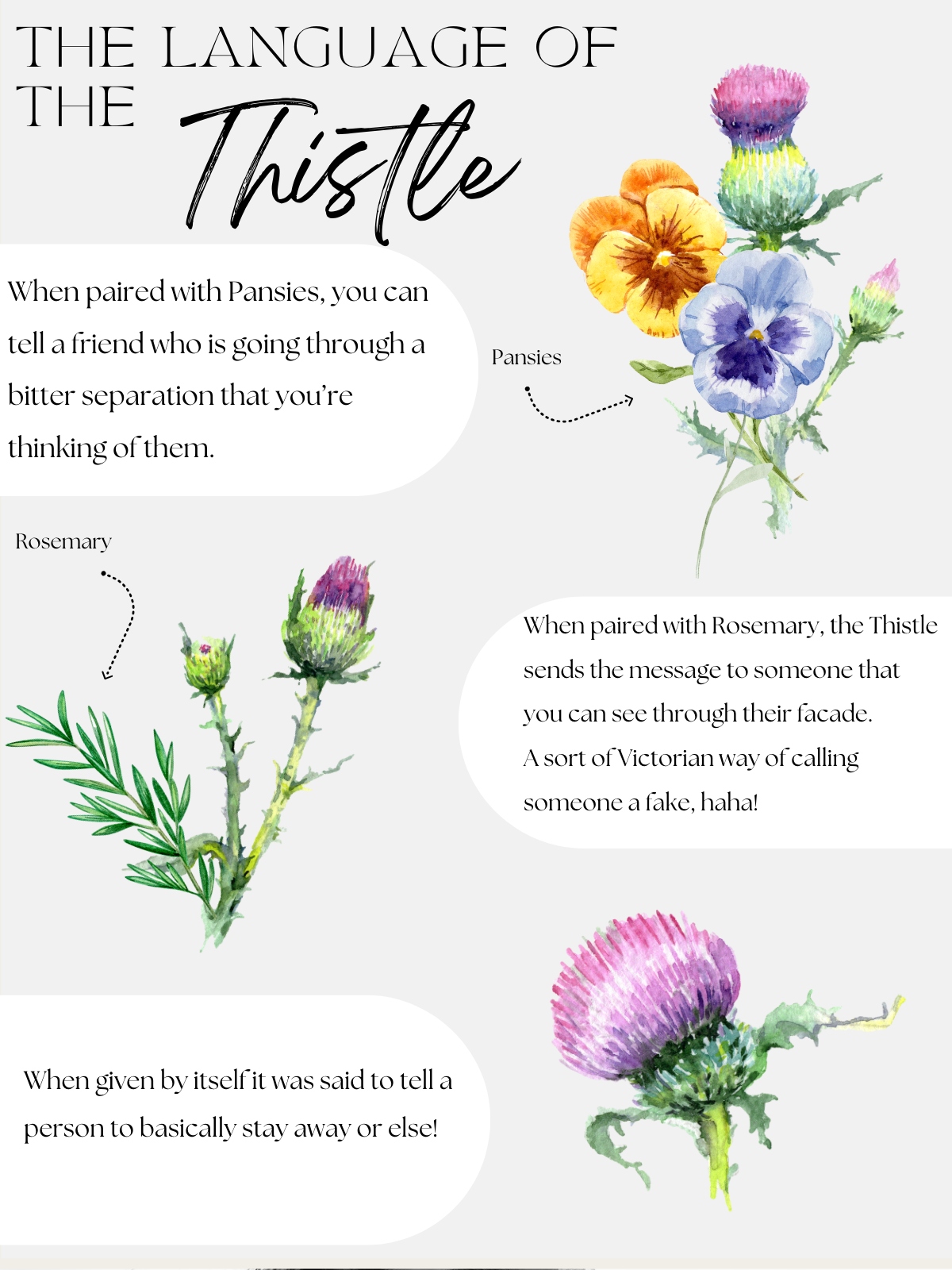
Let’s start with the Victorian Language of the Thistle first. The word associated with the Thistle is Misanthropy, which is defined as “the dislike of human kind”. This of course comes from the prickly barbs guarding the flower in almost a way that says “stay away from me”. It doesn’t appear to want to be touched or bothered with.
The association with this definition may also come from the Bible. It’s written in Genesis that when God cast Adam and Eve out of the Garden of Eden, he told them that thorns and thistles would grow from the land as a part of their punishment. So perhaps it’s God’s frustration with his newly created “human kind” that lends this meaning to the Thistle.
Here are a few ways Thistles were presented in the Victorian Language of Flowers to say slightly different things to their receivers.
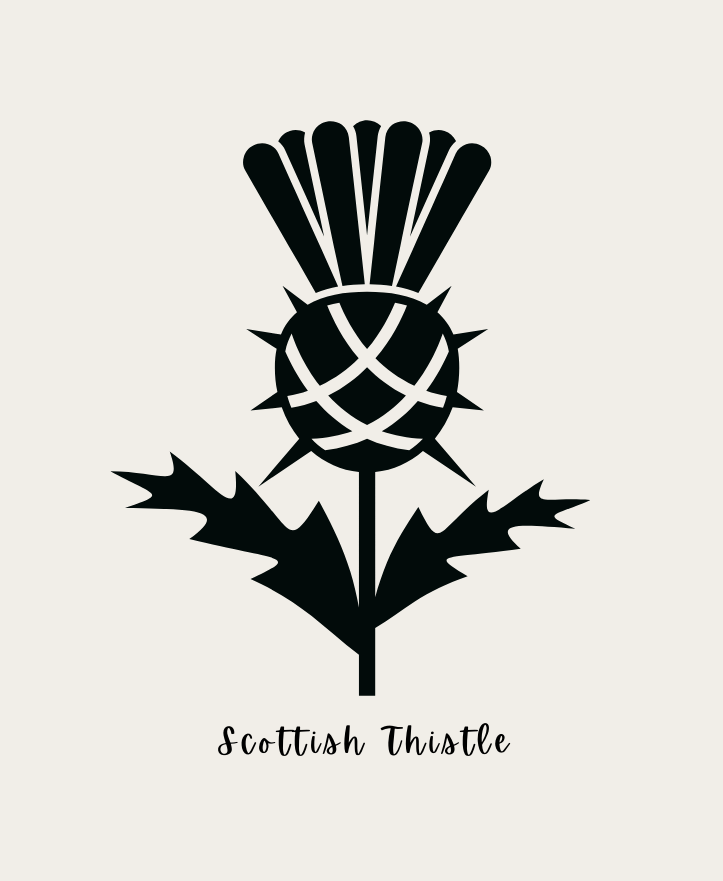
Thistle’s ties to Scotland
The Scots saw the Thistle to be a resilient plant. Tough, durable, and defiant against aggressors, which was what they sought to embody for themselves as fierce warriors and countrymen. So the Thistle was the perfect fit for becoming their National emblem.
There is a story or legend of a Viking sneaking in for an attack who stepped on a thistle and his cry of pain alerted the clan of Scotsmen just in time to defend themselves from the attack.
So not only do the Scottish see themselves in the Thistle, but the Thistle has been remembered as a symbol of protection for those who claim it.
Thistle is also associated with the Fall Equinox, and as you know, we have been covering all things related to it in these past few posts. You can read more about Mabon/Autumn Equinox here. Be sure to come back for next Month’s Flower post where I’ll cover the Marigold which is going to be really interesting!
Be well, and blessed be!
References:
A Victorian Flower Dictionary by Mandy Kirkby
Floriography by Jessica Roux
The Complete Language of Herbs by S. Theresa Dietz
 Ink & Amethyst